
Bird Population Study at Le Bosquet — 2007
An ornithological project in cooperation with Jean Collette and GONm.
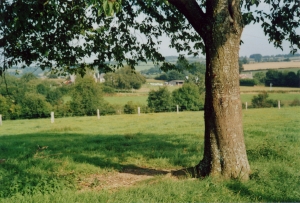
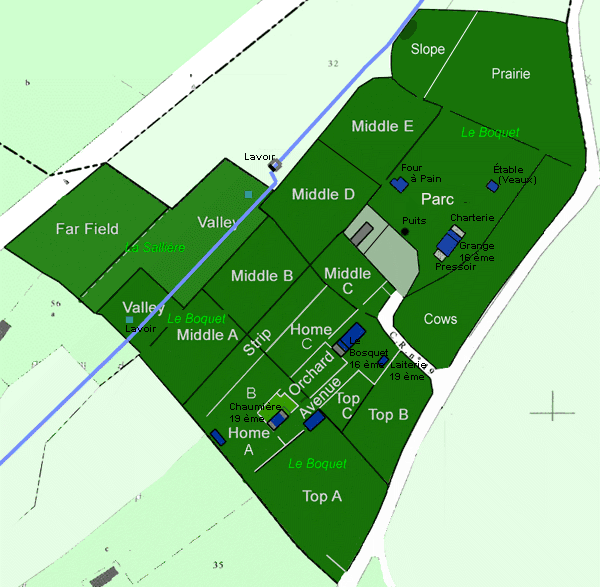
In 2004 Jean Collette of the Groupe Ornithologique Normand (GONm) kindly agreed to select our tiny farm in the Norman Bocage as a site for a long-term study of its permanent, seasonal and migratory bird population. By carefully noting any changes in the immediate and adjacent environment, we hope that from regular censuses over a period of time we may learn more about our resident and visiting bird populations. (See also Small Farm Structures in the Bocage Virois.)
We are extremely grateful to Jean 'William' Collette for his constant help, advice and regular visits to compile the census information which appears below. When he began his monthly visits in 2004, we were sufficiently impressed by the numbers of birds he was able to identify. By 2006 we were astonished to find him recording, flora, fauna and fungi in extraordinary detail. "Merci, cher William! Quel travail, quelle diligence, quel bonheur!".
For the fullest information from these censuses, please click on the small graphics to see the detailed analysis and the consistency and frequency statistics for each species.
Explication en français: cliquez sur les petites images pour les voir agrandies et pour y trouver en français:
La constance est le rapport, exprimé en %, entre le nombre de visites où une espèce est notée et le nombre total de visites. Exemple: une espèce vue au cours de la moitié des relevés a une constance de 50%.
La fréquence est le rapport, exprimé en %, entre le nombre d'individus d'une espèce, comptés au cours d'une sortie, et le nombre total d'oiseaux comptés au cours de cette visite. Exemple: 100 oiseaux, toutes espèces confondues, ont été comptés au cours d'une visite. Le merle qui est représenté par exemple par 30 individus, est caractérisé par une fréquence de 30% au cours de cette visite.
Introduction — 2004 — 2005 — 2006 — 2007 — 2008 — 2009 — 2010 — 2011 — 2012 — 2013 — 2014
Censuses by Jean Collette. Compilation by Christopher Long
2007
Sadly, owing to personal circumstances, Jean Collette was unable to make his monthly bird censuses during the period March 2007 to January 2008. He recommenced his visits in February 2008.
Visit 20 — 22-01-2007
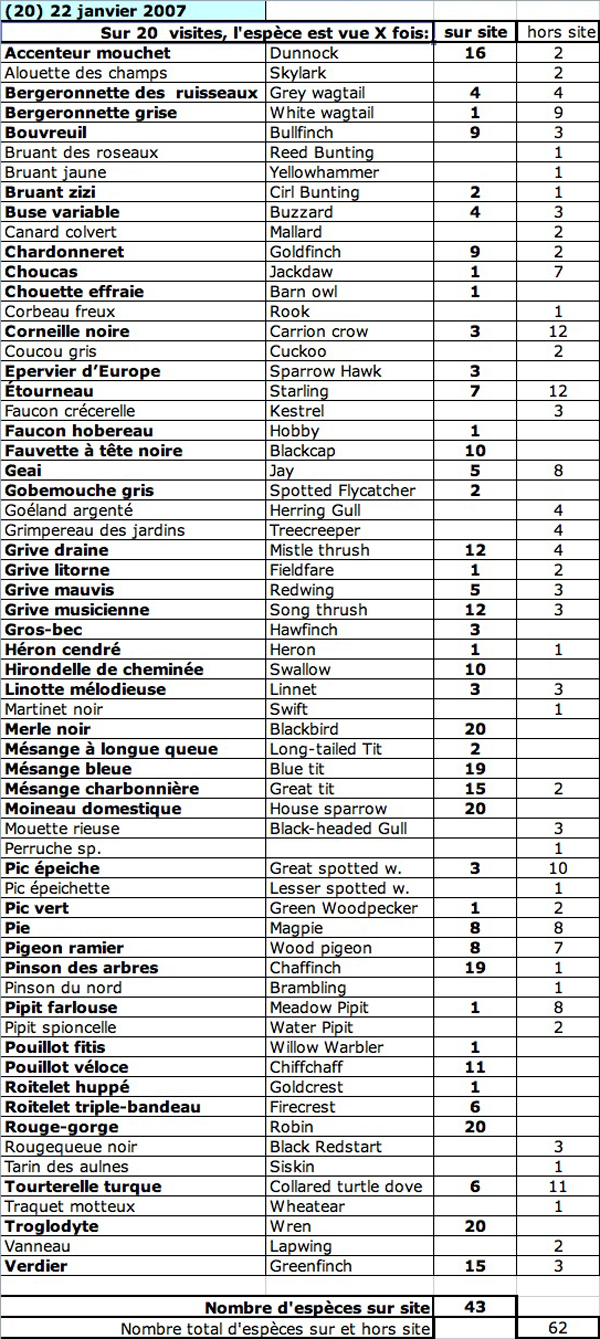
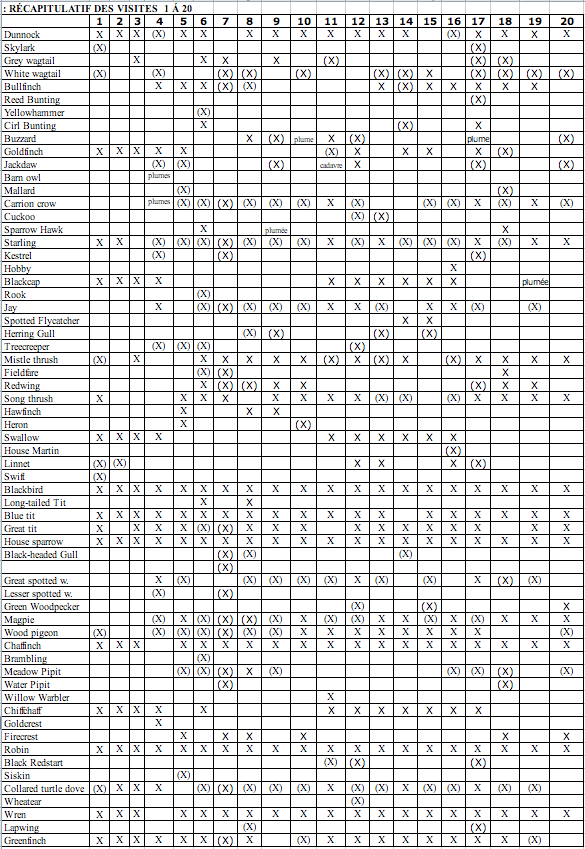
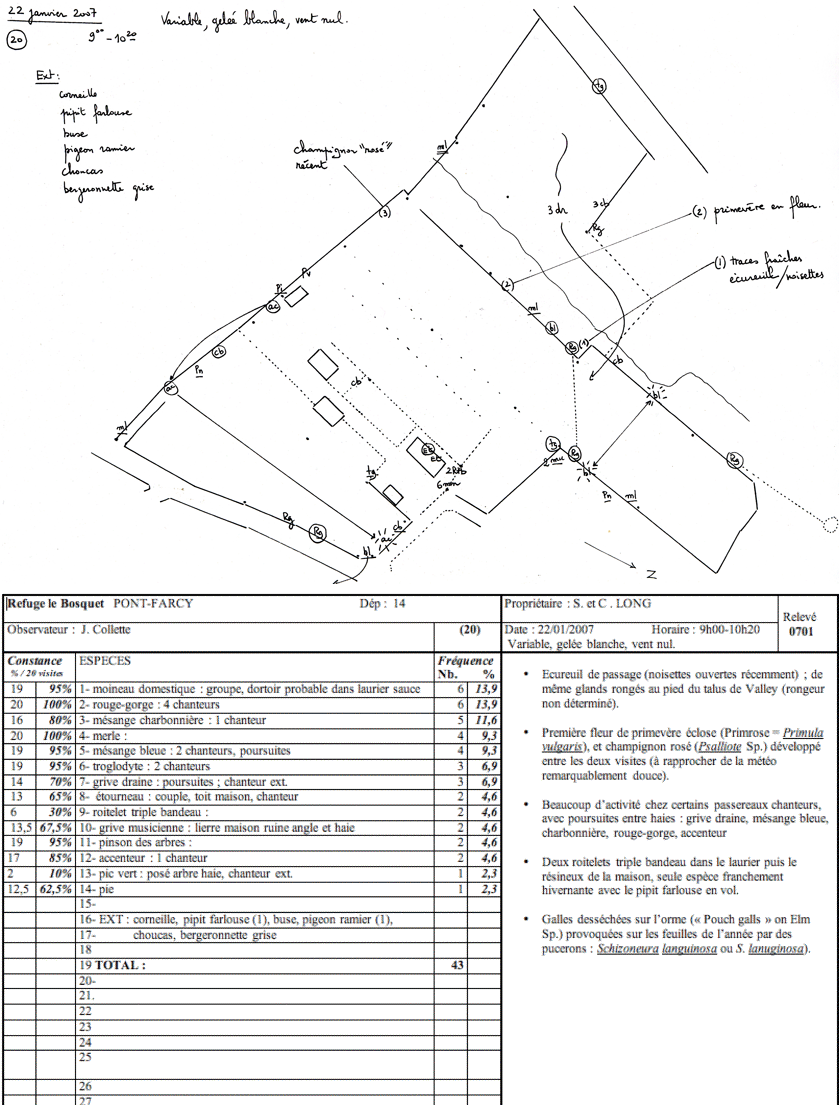
20. On 22-01-2007 the following species were recorded (9:00 - 10:20; Variable, frost, no wind):
- Present at Le Bosquet:
- Sparrow (Moineau Domestique) (19) group in laurel, probably a dormitory
- Robin (Rouge-gorge) (20) 4 singing
- Great Tit (Mésange Charbonnière) (16) 1 singing
- Blackbird (Merle) (20)
- Blue Tit (Mésange Bleue) (19) 2 singing, chases
- Wren (Troglodyte) (19) 2 singing
- Mistle Thrush (Grive Draine) (14) chases and 1 singing nearby
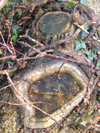
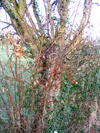
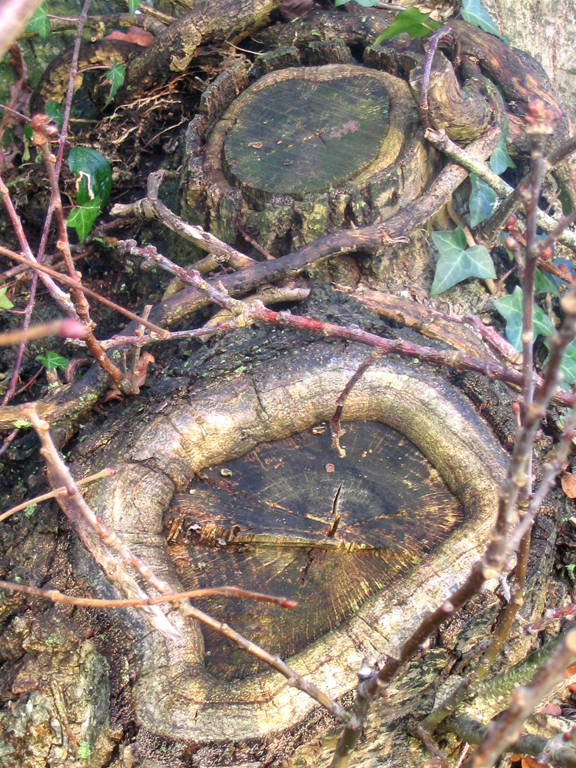
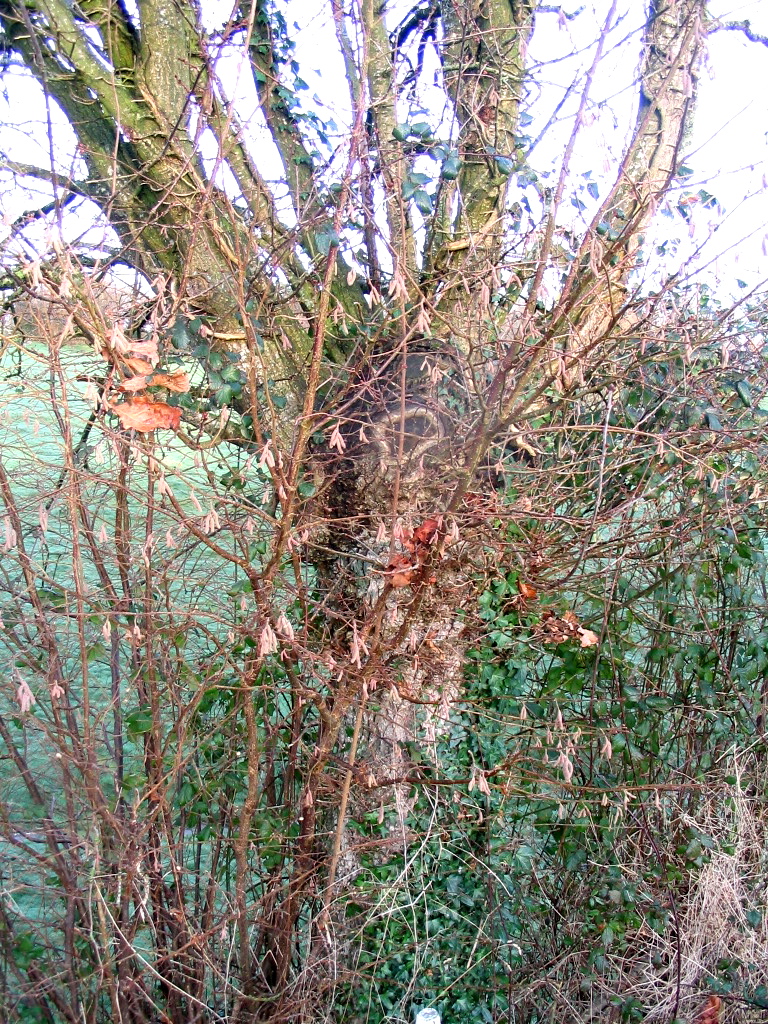
Right: In Normandy it is customary to pollard some hedgerow trees (e.g. oaks) in order to provide a form of coppiced firewood (see picture left). Lopping these branches usually results in scarring which produces a 'boss' around the cut surface, as shown here (see picture right). But sometimes the cut surface does not heal quickly enough (see same picture) which eventually results in a hollow where birds may nest (tits for example) and where particular insect species may live. The cavity may damage the heart-wood of the tree but the tree itself remains alive.
- Starling (Etourneau) (13) pair, on roof of house, singing
- Firecrest (Roitelet Triple Bandeau) (6)
- Song Thrush (Grive Musicienne) (13.5) in ivy on corner of ruined house and hedge
- Chaffinch (Pinson des Arbres) (19)
- Dunnock (Accenteur) (17) 1 singing
- Green Woodpecker (Pic Vert) (1) sitting in hedgerow tree and singing nearby
- Magpie (Pie) (12.5)
- Overflying or nearby:
- Carrion Crow (Corneille) (14)
- Meadow Pipit (Pipit Farlouse) (9) 1
- Buzzard (Buse) (7)
- Wood Pigeon (Pigeon Ramier) (16)
- Jackdaw (Choucas) (8)
- White Wagtail (Bergonette Grise) (10)
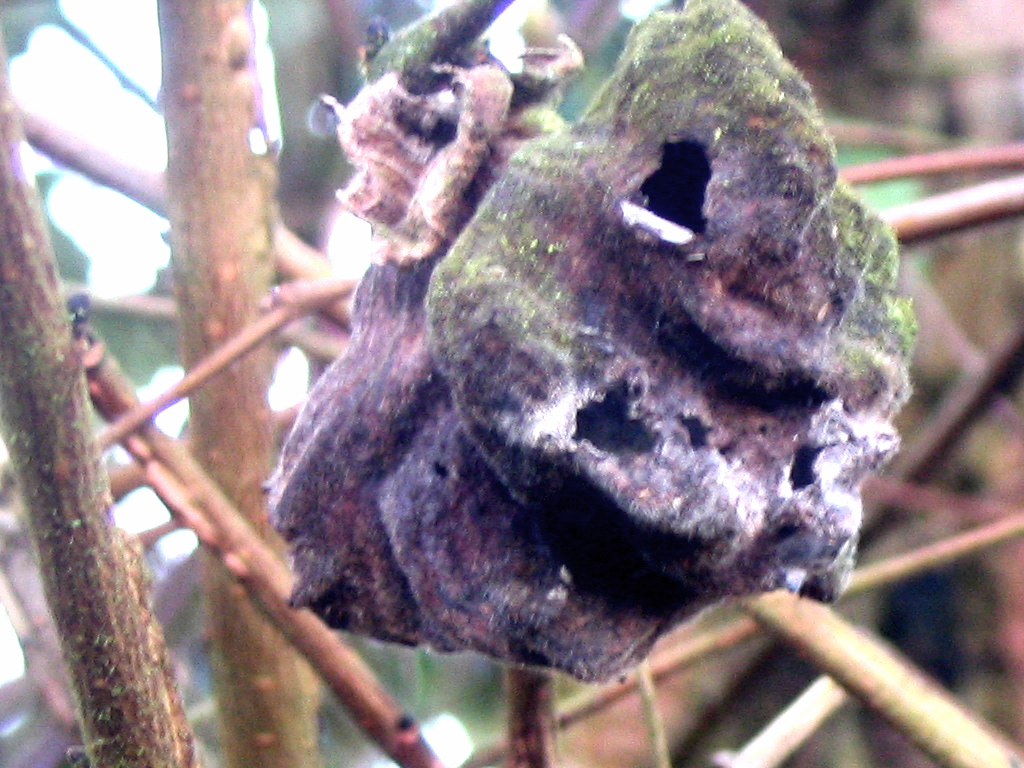
Right: A 'pouch-gall' (= galle) on hedgerow elm which is produced by aphids which deform elm leaves. In English similar 'gall' effects (e.g. 'oak apples') are caused by parasites.
- Notes:
- Evidence of presence of squirrels (recently opened nuts). Similarly gnawed acorns found at the foot of the bank in the Valley (rodent concerned no identified)
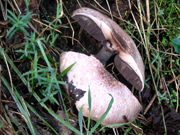
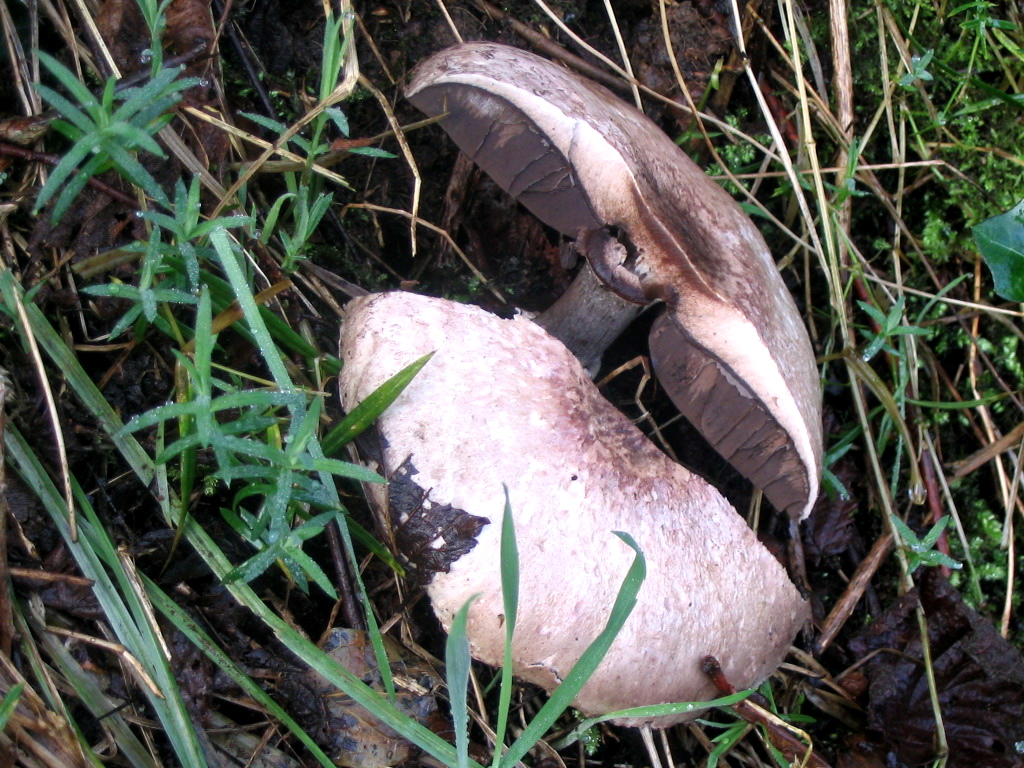
- First Primrose (= Primula vulgaris) in flower and a pink fungus (= Psalliote Sp.) had developed since the last census (cause: the remarkably mild weather)
- Much activity among some songbirds with chases between hedges: Mistle Thrushes, Blue Tits, Great Tits, Robins and Dunnock
- Two Firecrests heard in the laurel and the conifer near the house, the only true over-wintering species along with the Meadow Pipit in flight
- Dried "pouch galls" found on hedgerow elms, produced on the previous year's leaves by aphids (= Schizoneura languinosa or S. lanuginosa).
Above right: A Psalliote mushroom observed in January, out of season as a result of the exceptionally mild winter. Snow and frost first appeared on 24 January.
- Evidence of presence of squirrels (recently opened nuts). Similarly gnawed acorns found at the foot of the bank in the Valley (rodent concerned no identified)


Anyone interested in birds and the preservation, conservation or protection of their natural environments in the Normandy region should consider joining the Groupe Ornithologique Normand (GONm): 181 Rue d'Auge, 14000 Caen, France. Tel: +33 2 31 43 52 56 Fax: +33 2 31 93 27 07. Email GONm.