
Bird Population Study at Le Bosquet — 2005
An ornithological project in cooperation with Jean Collette and GONm.
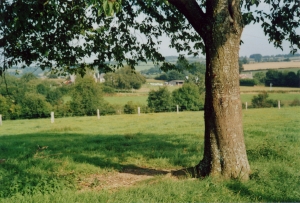
In 2004 Jean Collette of the Groupe Ornithologique Normand (GONm) kindly agreed to select our tiny farm in the Norman Bocage as a site for a long-term study of its permanent, seasonal and migratory bird population. By carefully noting any changes in the immediate and adjacent environment, we hope that from regular censuses over a period of time we may learn more about our resident and visiting bird populations. (See also Small Farm Structures in the Bocage Virois.)
We are extremely grateful to Jean 'William' Collette for his constant help, advice and regular visits to compile the census information which appears below. When he began his monthly visits in 2004, we were sufficiently impressed by the numbers of birds he was able to identify. By 2006 we were astonished to find him recording, flora, fauna and fungi in extraordinary detail. "Merci, cher William! Quel travail, quelle diligence, quel bonheur!".
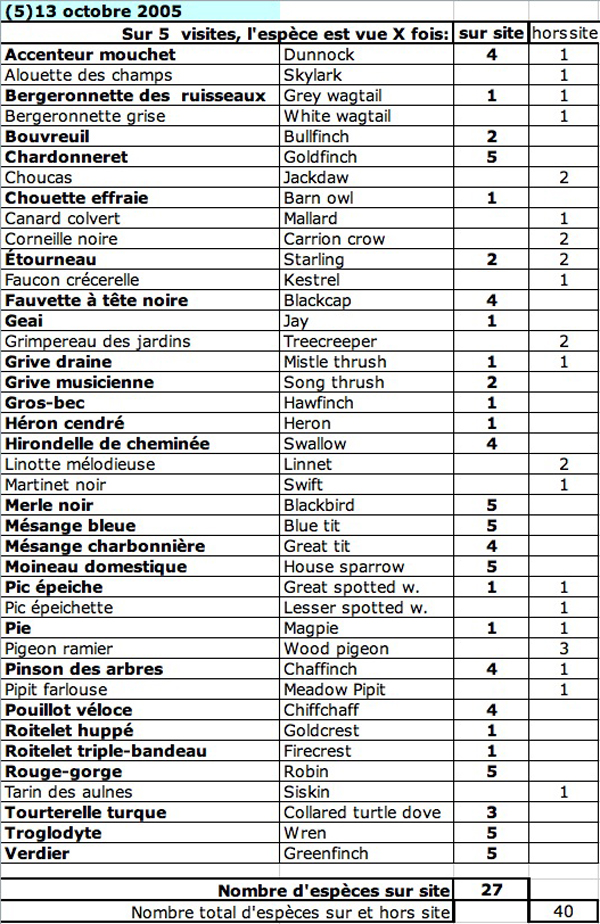
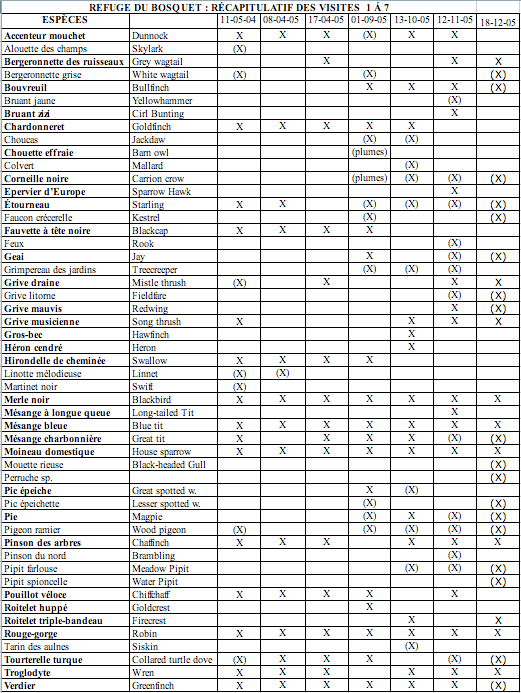
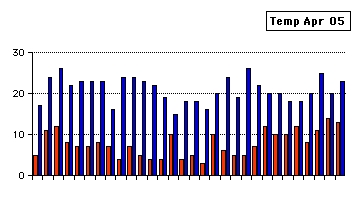
For the fullest information from these censuses, please click on the small graphics to see the detailed analysis and the consistency and frequency statistics for each species.
Explication en français: cliquez sur les petites images pour les voir agrandies et pour y trouver en français:
La constance est le rapport, exprimé en %, entre le nombre de visites où une espèce est notée et le nombre total de visites. Exemple: une espèce vue au cours de la moitié des relevés a une constance de 50%.
La fréquence est le rapport, exprimé en %, entre le nombre d'individus d'une espèce, comptés au cours d'une sortie, et le nombre total d'oiseaux comptés au cours de cette visite. Exemple: 100 oiseaux, toutes espèces confondues, ont été comptés au cours d'une visite. Le merle qui est représenté par exemple par 30 individus, est caractérisé par une fréquence de 30% au cours de cette visite.
Introduction — 2004 — 2005 — 2006 — 2007 — 2008 — 2009 — 2010 — 2011 — 2012 — 2013 — 2014
Censuses by Jean Collette. Compilation by Christopher Long
2005
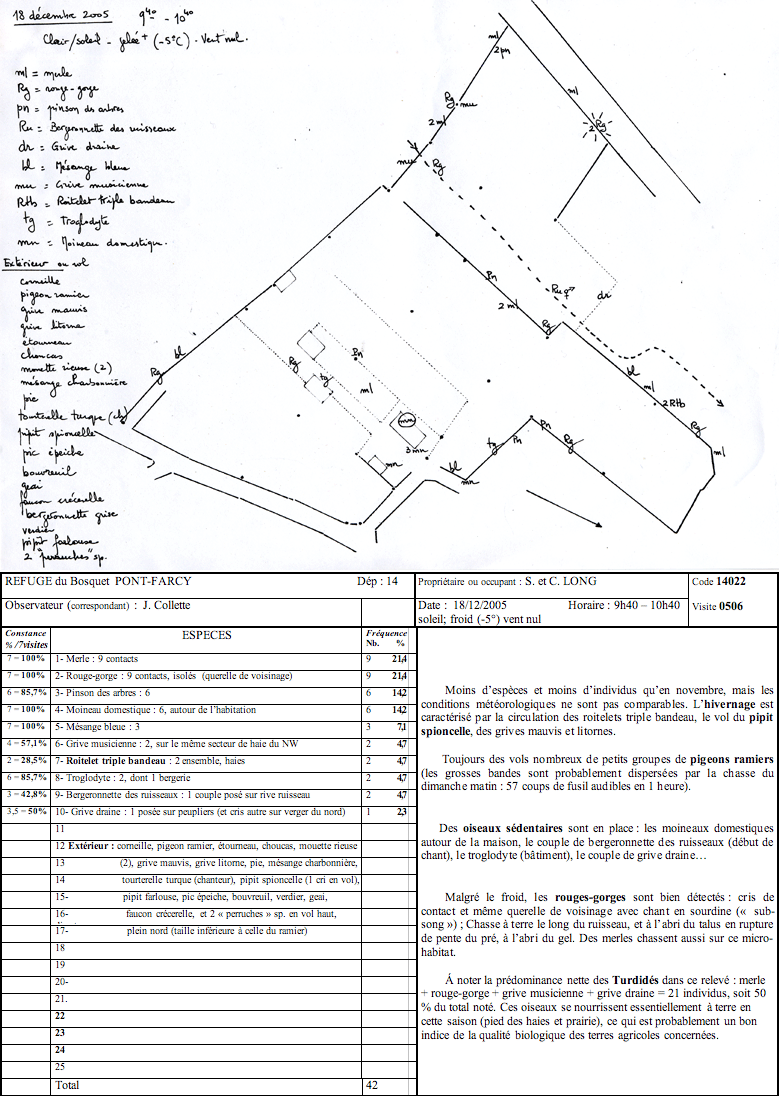
7. On 18-12-2005 the following species were recorded (9:40-10:40; weather: sunny, no wind, cold -5C):
- Present at Le Bosquet:
- Blackbird (Merle) (9)
- Robin (Rouge-gorge) (9) various and quarrels
- Chaffinch (Pinson des Arbres) (6)
- Sparrow (Moineau Domestique) (6) around the house
- Blue Tit (Mésange Bleu) (3)
- Song Thrush (Grive Musicienne) (2) Far field
- Firecrest (Roitelet Triple Bandeau) (2) pair, hedges
- Wren (Troglodyte) (2) one at Cottage
- Grey Wagtail (Bergeronnette des Ruisseaux) (3) a couple on the bank of the stream
- Mistle Thrush (Grive Draine) (4) one sitting in the poplars and another sitting in the field to the north
- Overflying or nearby:
- Carrion Crow (Corneille) (4)
- Wood Pigeon (Pigeon Ramier) (5)
- Starling (Etourneau) (6)
- Jackdaw (Choucas) (3)
- Black-headed Gull (Mouette Rieuse) (1) two seen
- Redwing (Grive Mauvis) (2)
- Fieldfare (Grive Litorne) (2)
- Magpie (Pie) (4)
- Great Tit (Mésange Charbonnière) (7)
- Collared Turtle Dove (Tourterelle Turque) (6) singing
- Water Pipit (Pipit Spioncelle) (1) one singing in flight
- Meadow Pipit (Pipit Farlouse) (3)
- Great Spotted Woodpecker (Pic Epeiche) (3)
- Bullfinch (Bouvreuil) (4)
- Greenfinch (Verdier) (7)
- Jay (Geai) (3)
- Kestrel (Faucon Crécerelle) (2)
- Parrot (Perruche) (1) two flying high, due north and less than the size of a pigeon)
- Notes:
- Fewer species and fewer individuals than in November but weather conditions were not similar (severe frost today). The winter scene is characterised by over-flying Firecrests (Roitelet Triple Bandeau), Redwings (Grive Mauvis), the flight of the Water Pipits (Pipit Spioncelle) and Fieldfare (Grive Litorne).
- There are still numerous groups of Wood Pigeons (Pigeons Ramiers) – though the large groups were probably dispersed by Sunday morning shooting: 57 shots in one hour.
- Sedentary birds are still present: House Sparrows (Moineaux Domestiques) around the house; a pair of Grey Wagtail (Bergeronnette des Ruisseaux) beginning to sing; a Wren (Troglodyte) at the Cottage; and a pair of Mistle Thrushes (Grive Draine)...
- Despite the cold, Robins (Rouge-gorge) were very evident: contact cries and even a neighbourly quarrel with song and sub-song (sourdine); ground level hunting along the stream and in the lee of the bank (talus) sheltered from the frost. Blackbirds (Merles) were also hunting on this micro-habitat.
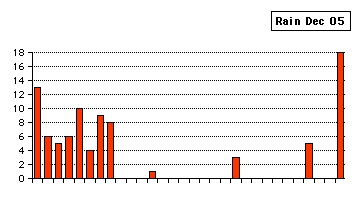
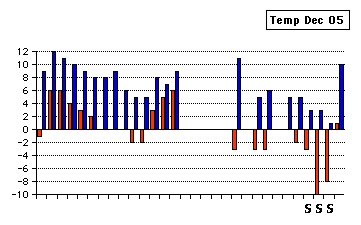
- Note the large number of (Turdidés) in the census: Blackbirds (Merle) + Robins (Rouge-gorge) + Song Thrushes (Grive Musicienne) + Mistle Thrushes (Grives Draines) = 21 individuals, i.e. 50% of the total. These birds feed largely at ground level at this time of the year (at the foot of hedges and on open fields) which may indicate the good biological quality of the farmland concerned.

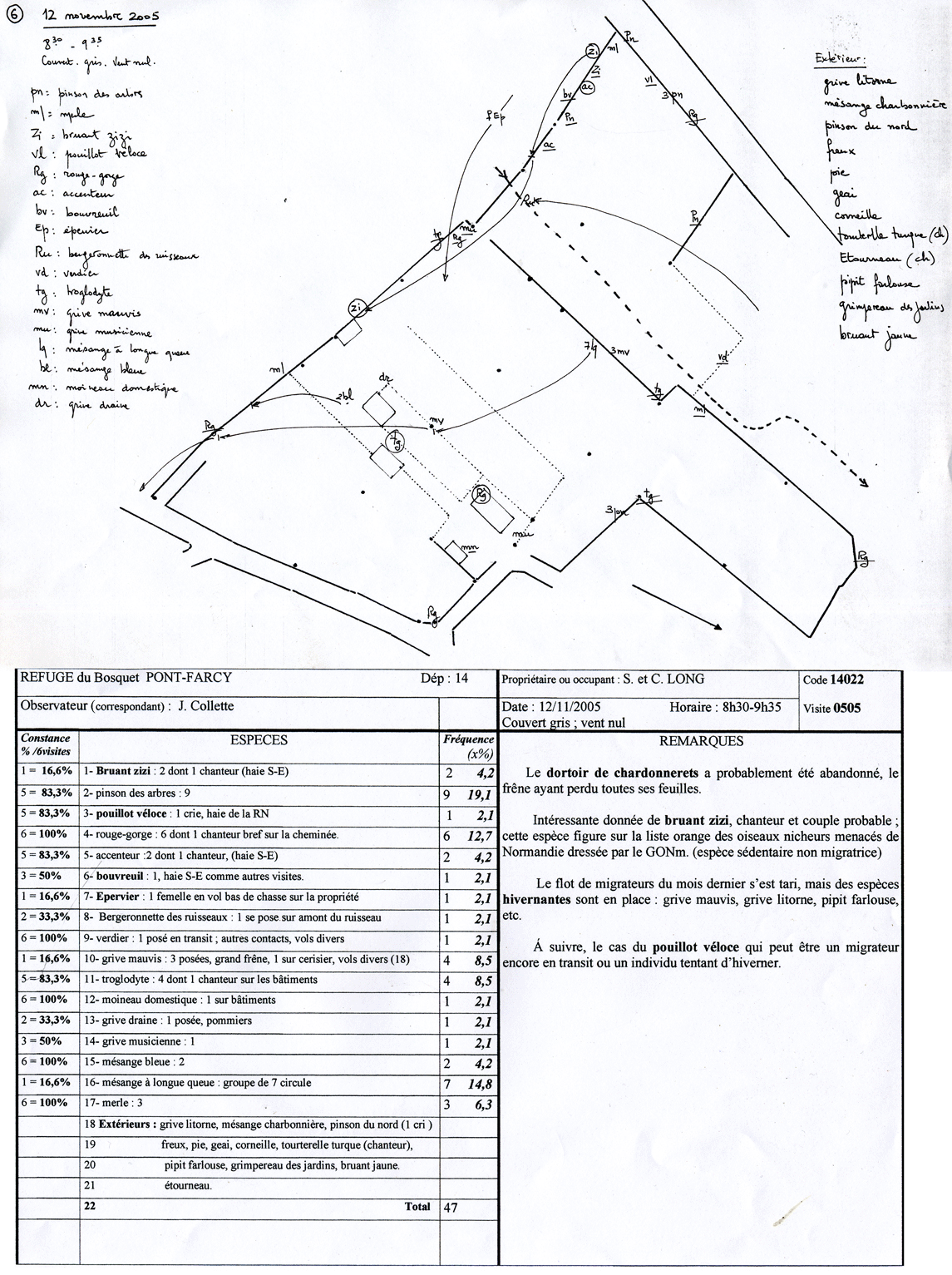
6. On 11-11-2005 the following species were recorded (8:30-9:35; weather: cloudy, no wind):
- Present at Le Bosquet:
- Mistle Thrush (3)
- Blackbird (6)
- Dunnock (6)
- Greenfinch (6)
- House Sparrow (6)
- Chaffinch (5)
- Robin (6)
- Wren (5)
- Blue Tit (6)
- Chiff-chaff (Pouillot Veloce) (5)
- Song Thrush (3)
- Grey Wagtail (2)
- Bullfinch (3)
- Cirl Bunting (1)
- Sparrow Hawk (1)
- Redwing (1)
- Long-tailed Tit (1)
- Overflying or nearby:
- Collared Turtle Dove (5)
- Wood Pigeon (4)
- Starling (5)
- Great Tit (6)
- Jay (2)
- Tree-creeper (3)
- Magpie (3)
- Carrion Crow (3)
- Meadow Pipit (2)
- Fieldfare (1)
- Brambling (1)
- Rook (1)
- Cirl Bunting (1)
- Notes:
- The flock of Goldfinches (Chardonnerets) has probably decamped, the tall ash tree in Middle B having lost all its leaves.
- Interesting presence of the Cirl Bunting (Bruant Zizi), one singing, perhaps a couple. This species features on the 'orange' list of threatened nesting birds in Normandy, as assessed by GONm (permanent, non-migratory species).
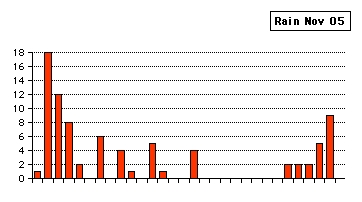
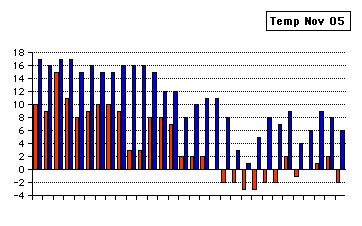
- The passage of migrants last month has slowed but over-wintering species have appeared: Redwing (Grive Mauvis), Fieldfare (Grive Litorne), Meadow Pipit (Pipit Farlouse).
- It remains to be seen whether the Chiff-chaff (Pouillot Véloce) is a migrator in transit or an individual over-wintering.
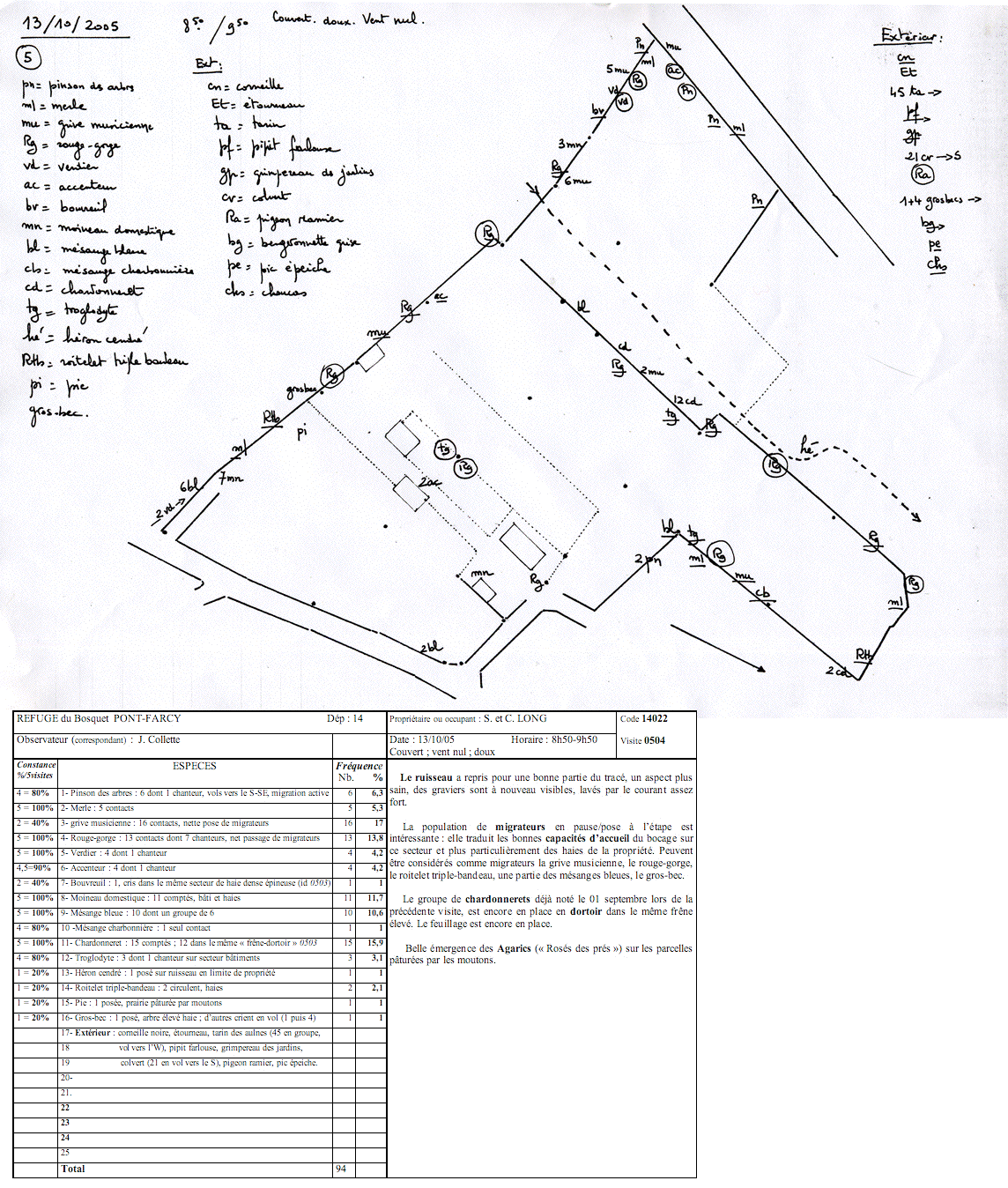
5. On 13-10-2005 the following species were recorded (8:50-9:50; weather: cloudy, no wind, mild):
- Present at Le Bosquet:
- Blackbird (5)
- Great Tit (4)
- Dunnock (5)
- Greenfinch (5)
- House Sparrow (5)
- Chaffinch (4)
- Robin (5)
- Goldfinch (5)
- Wren (4)
- Blue Tit (5)
- Song Thrush (2)
- Bullfinch (2)
- Magpie (2)
- Heron (1)
- Firecrest (1)
- Hawfinch (1)
- Overflying or nearby:
- Wood Pigeon (3)
- Starling (4)
- Greater Spotted Woodpecker (2)
- Tree Creeper (2)
- Jackdaw (2)
- Carrion Crow (2)
- Siskin (1)
- Meadow Pipit (1)
- Mallard (1)
- Notes:
- The stream has re-established its course and looks healthier with a gravel bed visible again, washed through by a strong current.
- The population of migrant birds resting up is interesting: a consequence of the welcoming nature of the bocage in this area and particularly of the hedges on the property. Song Thrushes, Robins, Firecrests and Blue Tits could all be considered migrants.
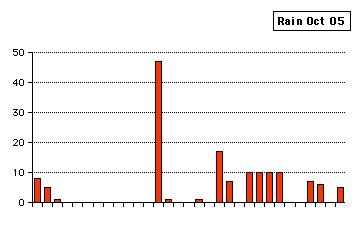
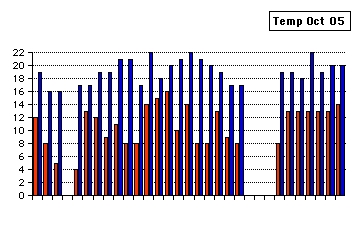
- The flock of Goldfinches noted on 01-09-2005 is still in situ using the same tall ash tree (still with leaves) as a dormitory.
- Impressive appearance of Agarics ('Rosés des prés') on the fields grazed by the sheep.


4. On 04-09-2005 the following species were recorded (7:35-8:45):
- Present at Le Bosquet:
- Collared Turtle Dove (4)
- Blackbird (4)
- Great Tit (3)
- Greenfinch (4)
- House Sparrow (4)
- Swallow (4)
- Robin (4)
- Goldfinch (4)
- Blackcap (4)
- Blue Tit (4)
- Chiff-chaff (4)
- Greater Spotted Woodpecker (1)
- Bullfinch (1)
- Gold-crest (1)
- Jay (1)
- Overflying or nearby:
- White Wagtail (2)
- Wood Pigeon (2)
- Dunnock (4)
- Tree-creeper (1)
- Lesser Spotted Woodpecker (1)
- Jackdaw (1)
- Magpie (1)
- Kestrel (1)
- Starling (3)
- Evidence of presence (e.g. feathers):
- Carrion Crow (1)
- Barn Owl (1)
- Seen in previous days:
- Heron
- Buzzard (pair plus one young)
- Notes:
- Excellent development of the hedges (gaps now filling thanks to three years of progressive hedge-laying). Abundance of wild fruit (berries, nuts, etc).
- On the census day there was a gathering of well over 150 Swallows (probably from a dormitory in a neighbouring maize field).
- Probable Goldfinch dormitory in the large oak in Middle Field A/B.
- This year at least 16 Swallow fledglings were produced in the Dairy outbuilding alone. Several more were fledged in the Cottage.
- Stream still in poor condition: very little flow (consequence of maize production,
500 litres of water for each kilo of maize!), banks broken down by young heifers, green
algae present and evidence of muskrats (tracks and droppings).
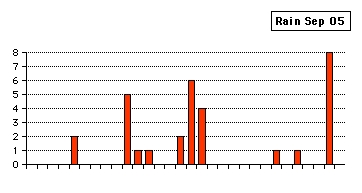

- The sound of a Wood Cricket was heard among dead leaves half-way along the foot of the Western hedge in Far Field.
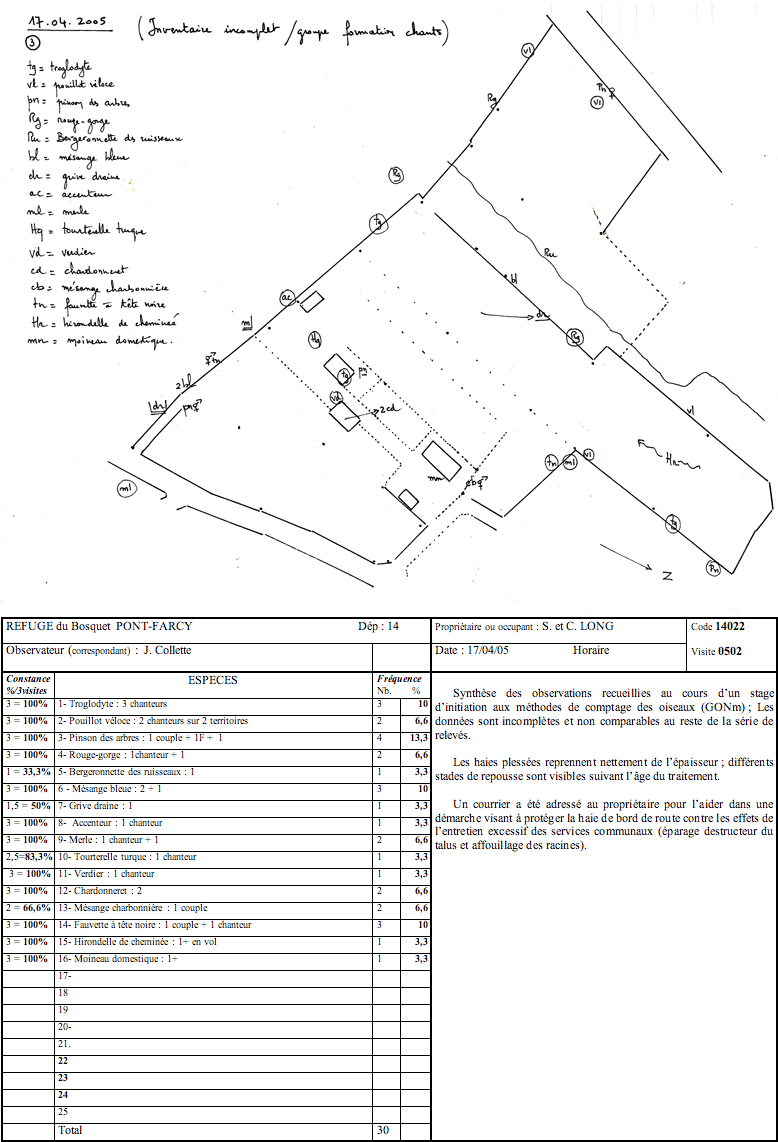
3. On 17-04-2005 the following species were recorded by more than a dozen ornithologists attending a day-long practical demonstration on bird observation given by Jean Collette (birds recorded are a synthesis of all observations):
- Present at Le Bosquet:
- Mistle Thrush (2)
- Collared Turtle Dove (3)
- Blackbird (3)
- Great Tit (2)
- Dunnock (3)
- Greenfinch (3)
- House Sparrow (3)
- Swallow (3)
- Chaffinch (3)
- Robin (3)
- Goldfinch (3)
- Wren (2)
- Blackcap (3)
- Blue Tit (3)
- Chiff-chaff (3)
- Grey Wagtail (1)
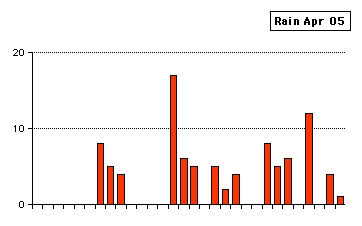
2. On 08-04-2005 the following species were recorded (8:15-9:00; weather: cold NW wind):
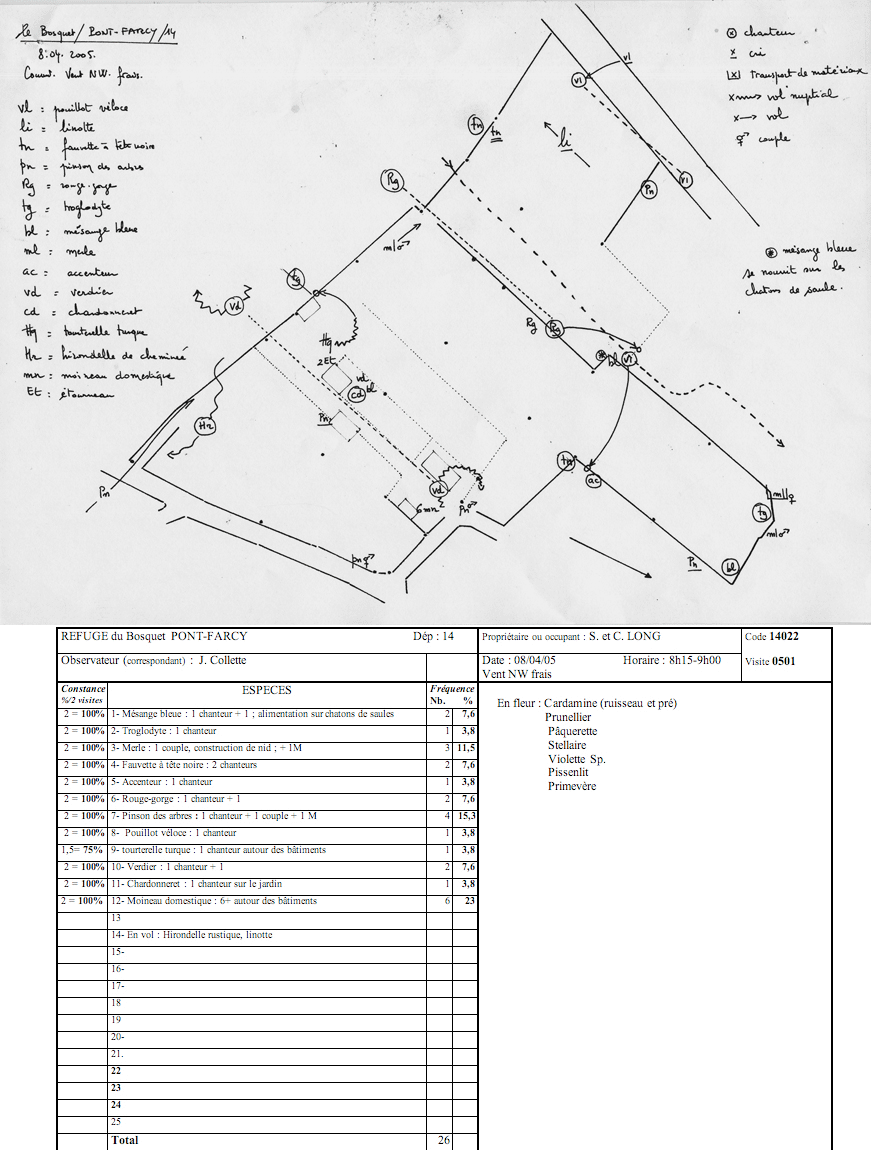
- Present at Le Bosquet:
- Collared Turtle Dove (2)
- Starling (2)
- Blackbird (2)
- Dunnock (2)
- Greenfinch (2)
- House Sparrow (2)
- Swallow (2)
- Robin (2)
- Goldfinch (2)
- Blackcap (2)
- Blue Tit (2)
- Chiff-chaff (2)
- Overflying or nearby:
- Linnet (2)
L’hirondelle et la vache
Il existe de multiples liens entre les oiseaux sauvages et l’agriculture. Dans certains cas, le lien est reconnu comme une évidence : le nid d’hirondelle dans l’étable « était » de ceux-là. Des grottes initiales aux maisons plus sophistiquées, l’hirondelle de cheminée a accompagné l’homme bâtisseur, préférant finalement plus souvent l ‘étable que la salle à manger quand il lui a fallu choisir !
La présence de bétail, et plus particulièrement des vaches laitières, a été mesurée comme facteur de choix de la part de l’hirondelle rustique, comme elle se nomme maintenant (Hirundo rustica en latin) : s’installe - t- elle dans n’importe quelle ferme ? L’image va y perdre de sa poésie, mais le débat y gagne en clarté.
Une étude menée au Danemark de 1970 à 1999 illustre le lien fort qui unit l’hirondelle et la vache laitière. Le chercheur compare l’évolution de deux populations d’hirondelles : celle nichant sur des fermes laitières qui poursuivent leur activité, celle nichant sur des fermes laitières qui abandonnent le lait pour produire des céréales, du tournesol, etc, mais qui conservent cependant des chevaux, des moutons ou même des bœufs. Dans ce dernier cas, les chiffres sont impressionnants : la population décroît de 48 % en moyenne, et cette chute est essentiellement due au déficit de jeunes venant s’installer pour une première nidification. En clair, ces fermes sans vaches ne sont plus attractives pour les jeunes couples. Des mesures précises sur les poussins au nid montrent que ceux qui naissent sur les fermes sans vaches laitières sont moins lourds, ont le corps plus petit, ont moins de globules sanguins, moins de leucocytes, et des réponses immunitaires affaiblies. La date moyenne de reproduction des adultes est retardée en l’absence de vaches, le nombre d’œufs pondus est plus faible…
On peut faire confiance, sur ce sujet, aux résultats de A. P. MØLLER, chercheur au CNRS à Paris : Ceux-ci sont publiés dans le Journal of Applied Ecology en 2001, et ses protocoles et calculs statistiques sont ceux d’un professionnel reconnu.
L’auteur va plus loin dans ses observations : les hirondelles (reconnues individuellement grâce à des marques colorées sur le plumage) chassent à proximité immédiate de leur nid. 98 % du temps de chasse se déroule à moins de 500 m, et même 50 % à moins de 100 m ! Le chercheur mesure la quantité d’insectes disponibles grâce à des pièges, calcule la ration des poussins grâce à des collectes dans les gosiers, compare les insectes disponibles et les apports des parents au nid : tout concorde, « la taille de la colonie d’hirondelles sur les fermes est corrélée positivement à la mesure de la quantité de nourriture ». Plus simplement, beaucoup d’insectes volants, beaucoup d’hirondelles… Et les vaches laitières dans ce raisonnement ? Simple : l’abondance moyenne d’insectes chute de 52 % en l’absence de vaches laitières. CQFD.
Si le titre avait été imaginé par La Fontaine, il y aurait eu une chute à cette histoire. La vache aurait parlé des mouches qui la harcèlent, l’hirondelle de ses petits qui ont faim, et la morale aurait concerné les hommes. Mais au 21e siècle, l’homme a sa place dans l’histoire : la vache laitière n’entretient pas seulement le terrain de chasse de l’hirondelle, et de beaucoup d’autres oiseaux du bocage, elle aide à construire une certaine société, et le paysage qui l’accompagne. « La plaine est morne et morte et la ville la mange » disait le poète. Il aurait pu commencer par un premier vers en mémoire du bocage… un peu mangé par la plaine.
Pour le Groupe ornithologique normand,
Jean Collette
Anyone interested in birds and the preservation, conservation or protection of their natural environments in the Normandy region should consider joining the Groupe Ornithologique Normand (GONm): 181 Rue d'Auge, 14000 Caen, France. Tel: +33 2 31 43 52 56 Fax: +33 2 31 93 27 07. Email GONm.