
Heraldry In Byzantium
& the Vlasto family's double-headed eagles
Members of the Vlasto were already prominent in Rome and its frontier provinces by the end of the 2nd Century AD. Their position may have been augmented by Constantine The Great (c. 274 – 337 A.D.) who was not only the first Roman emperor to convert to Christianity but who also mobilised Christian church leaders to reinforce his own position (c.323 – 325 A.D.). Furthermore, by establishing his new 'Roman' empire in Byzantium (Constantinople), he probably needed the skills, statecraft and influence of older, well-established Greek families who long seem to have been prominent in Black Sea and Mediterranean trade. By 1092 Vlastos were prominent in Constantinople as members of its principal noble families.
These families were: Angelos, Argyros, Barbaro, Cantacuzene, Comnene (Comneno), Ducas, Lascaris, Melissinos, Melisurgo, Micrulaches, Palaelogos (Paleologue), Phocas, Phouskarnaki, Phrangopoulos, Rhadino, Rhangabe, Rhaoules (Ralli), Rhodocanakis (Rodocanachi), Vatatzes, Vlasto and Vlattera. With sublime precision, Philip Argenti claims the Vlastos occupied the 6th position among these principal families!
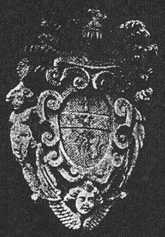
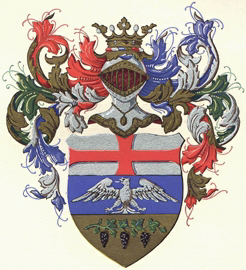
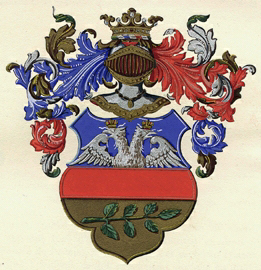
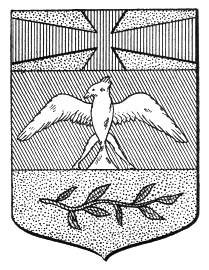
I am grateful to François R. Velde for this interesting introduction to the orgin of the double-headed eagle 'motif' which appeared in Byzantium in the C12th-13th and was adopted by a number of the principal noble families at that time – later being assumed by several royal and imperial houses, such as those in Russia and Serbia. The mystery is why the Vlasto family appears to have adopted it as their symbol centuries earlier (see examples below) and what its significance was then – long before the arrival of the Empire in Byzantium which looked 'east and west'.



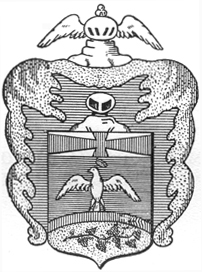

See other pages concerning the history of the Vlasto family
Heraldry in Byzantium?
The use of heraldic insignia as a symbolic representation of families did not develop in Byzantium. The broad range of images (Christ, the Virgin, the Cross, various saints) found on seals are personal rather than familial. Certain blazons have, however, been interpreted by some scholars as official imperial or familial coats of arms. Not until after the restoration of 1261 and the reign of the Paleologues can one find any trace of heraldry. After that date, the Byzantine court was much more open to importations from the West, for example tournaments. The Paleologues became allied with a number of prominent Western dynasties; this may have also contributed to their adoption of armorial bearings. The use then spread to the Greek nobility. In any case, this Byzantine heraldry of the C14th and C15th remained marginal.The Arms of Byzantium
Two particular insignia have attracted a lot of attention, namely the double-headed eagle and the "tetragrammatic cross" (cross between 4 B's).
First, the eagle: it appears as a decorative motif at the court of the last Comnenoi and the Ange family (C12th), on the ceremonial costumes of members of the imperial family but not on the emperor himself. The same is true of the court of the Laskaris in the empire of Nicea (1204-61). The Crusaders have used the double-headed eagle as symbol of the empire, although the arms of the empire itself were:
Gules, a cross between four crosslets or inscribed in an annulet each and between four crosslets each, all or.
The double-headed eagle was taken back to Western Europe by two daughters of the first Latin emperor, one who struck coins in Flanders with the eagle, the other marrying into the house of Savoy and bringing the eagle in the Savoy achievement.
Even after the restoration of the empire and the Paleologue emperors, the eagle is still used by the imperial family but not the emperor. The first known use is in 1301.
[N.B. While no doubt true in terms of formal court heraldry, the double-headed eagle (e.g. as adopted by the Vlasto family) may have had an earlier provenance – see: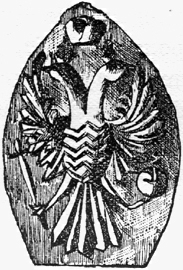
C.A.L.]
In the C14th the Paleologues used either a single-headed or double-headed eagle as an emblem, settling on the double-headed eagle in the C15th. But it always remained outside the shield. The exceptions occur in Western documents: Ulrich von Richental's Conciliumbuch describing the arms of the participants in the Constanz council of 1414-18 is one. As for the other, in August 1439 John VIII Palaiologos conferred upon Giacomo de Morellis, a citizen of Florence, the right to place on his banner the imperial blazon (semeion); a painted representation of a shield gules with a 'double-headed eagle or' on the document is probably a posterior addition.
Thus the eagle was probably never thought of as a charge, which explains the tradition of the former imperial families (as well as states such as Serbia) of placing their arms on an escutcheon on the breast of the eagle.
As for the tetragrammatic cross, even though it was considered at the time by some to be the arms of the Paleologue family, it was in fact the arms of the Byzantine empire. The motif of a croos between four objects is derived from Constantine's labarum and has long figured on Byzantine coins, since the C6th.
The B's of the tetragrammatic cross have been mostly interpreted as flints or firestones (purekbola in Greek), but also as letters. It is possible that they were initially letters, and later assimilated to firestones. The interpretation of the four B's standing for the motto "Basileus Basileon Basileuon Basileonton" (king of kings, ruling over those who rule) may well be posterior.Main source:
D. Cernovodeanu: Contributions à; l'Étude de l'Héraldique Byzantine et post-Byzantine, Jahrbuch der Österreichischen Byzantinik 32.2 (1982) 409-22.
Other sources (not consulted):
G. Gerola: L'Aquila Bizantina e l'Aquila Imperiale a Due Teste Felix Ravenna 43 (1934) 7-36.
A. Fourlas: Adler & Doppeladler, in Phyloxenia Münster 1980), 97-120.
W.H. Rüdt von Collenberg: Byzantinische Präheraldik des 10. & 11. Jhs, Recueil du 12e Congrès International des Sciences Héraldique et Généalogique (Stuttgart 1978), 169-81. (also published in Der Herold, Bd. 8, Heft 10, april-june 1977, p. 197-209).
A. Soloviev: Les Emblèmes Héraldiques de Byzance et les Slaves Seminarium Kondakovianum 7 (1935) 119-164.
Arms of Some Byzantine Families
These arms all come from Rietstap. The Angelos, Cantacuzene, Comnene, Ducas, Lascaris, Paleologue and Vatatzes families held the imperial throne at some point and all but one display a double-headed eagle. A branch of the Paleologue family ruled over Montferrat in Northern Italy when the title passed to the Gonzaga family (who quartered their arms with Paleologue); the latter died out in the early 18th Century. As for the Comnene, they were still living in Corsica at the time of the French Revolution.
- Angelos – gules, 4 lozenges Or with an angel on each. (Greece)
- Argyros – Or, a cross between 4 stars azure.
- Barbaro – Argent, an annulet gules.
- Cantacuzene – Gules, a double-headed eagle displayed crowned, Or. (Greece)
- Comnene – Or, beneath an imperial crown proper, a two-headed eagle displayed Sable on a sword per pale Argent, the hilt Or. (Corsica, Savoy) [See references to Anne Comnene and her references to the Vlastos]
- Comneno – Or, beneath an imperial crown proper, a double-headed eagle displayed Sable, holding in each claw a sword paleways Argent; on its breast an oval escutcheon, Argent 3 bells (?) Azure. (Milan) Comnenos (emperors of Trebizonde): Argent, three bars Sable. (Greece)
- Ducas – Azure, a cross Argent. (Greece) Koressio (dukes): Sable, beneath an imperial crown proper, a two-headed eagle displayed Or, holding in each claw a sword paleways Argent. (Greece) [See reference to Grand Duke Jean Ducas, Crete & the Vlasto family, AD 1089]
- Lascaris – Or, a double-headed eagle Sable, beaked Gules, beneath an eastern crown Or. (Greece)
- Lascaris – Gules, a double-headed eagle displayed crowned, Or; on its breast an escutcheon: Gules, a sun Or. (Verona, Dalmatia)
- Lascaris – quartered Azure and Argent, on which an double-headed eagle Sable, membered, beaked, crowned Or; on its breast an escutcheon: Gules, a sun Or. (Verona).
- Lascaris – Gules, a double-headed eagle displayed crowned, Or. (Greece, Provence)
- Lascaris – quartered Gules a chief Or; and Gules, a double-headed eagle displayed crowned, Or. Lascaris-Castellar: Or, a double-headed eagle Sable, membered, beaked Gules. (Italy)
- Melissinos – Gules, an escutcheon or, 3 bells sable, between six bees 1, 2, 2, 1 of the second.
- Melisurgo – Azure, on a mound in base three daisies argent, below four bees per fess or, in dexter chief a sun issuant of the last.
- Micrulaches – Gules, three lions passant or.
- Palaelogos – Gules, a Cross and four B's Or. (Greece)
- Paleologue – Gules, a double-headed eagle displayed crowned, Or. (Greece, Piedmont)
- Phocas – Gules, four lozenges conjoined in pale gules.
- Phouskarnaki – Azure, the figure of the Blessed Virgin bearing the Divine Child argent.
- Phrangopoulos – Sable, a fleur-de-lys or.
- Rhadino – Argent, the sun in splendor or.
- Rhangabe – Azure, a cross flory between the letters "e", "n", "t", "n" argent.
- Rhaoules (Ralli) – Azure, a leopard rampant or.
- Rhodocanakis (Rodocanachi) – Gules, a two-headed eagle or, on its breast an escutcheon Azure, a cross argent between ?.
- Vatatzes – Vert, a double-headed eagle displayed Or, above each head an estoile Argent. (Greece)
- Vlasto – Gules, three plates 2 and 1.
- Vlattera – Gules, 4 bends or.
François R. Velde
Vlasto Arms
Armoiries de droite:
Ecartelé, aux 1 er et 4 ème d'argent à l'aigle bicéphale éployée de sable, lampassée de gueules, posée sur un sceptre, surmontée d'une couronne royale du champ. Aux 2 ème et 3 ème de gueules, chargé de trois boutons de sinople, fleuris d'argent, posés en pal, rangés en fasce.
Casque: de profile a cinq grilles
Lambrequins: d'or et de sable
Devise: BLASTANW
Armoiries de gauche:
D'azur à l'aigle d'argent sur une champagne d'or chargée d'un rameau de sinople posé en fasce; au chef d'argent chargé d'une croix pattée de gueules.
Cimier: deux ailes d'argent sortant de chaque côté dur casque
Casque: de face à quatre grilles
Lambrequins: d'or et de sinople
Devise: BLASTANW
(See: Archivo Antico Biblioteca Universitaria, Padova, Consiglieri, Nazione Ultramarina, No. 482)


Tapestry versions of the arms described above.
Having sought and failed to obtain the permission of the author to reproduce this extract (published on the WWW), I gratefully acknowledge his work and contribution to this subject – CAL